
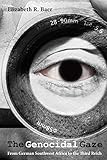
The Genocidal Gaze From German Southwest Africa to the Third Reich / Elizabeth R. Baer.
Material type: TextPublisher: Wayne State University Press, Description: 1 online resource (209 p.)ISBN: 9780814343852Subject(s): Literary Criticism / African | Literature -- History and criticismGenre/Form: Electronic books.Online resources: View this content on Open Research Library. Summary: The first genocide of the twentieth century, though not well known, was committed by Germans between 1904â€"1907 in the country we know today as Namibia, where they exterminated hundreds of Herero and Nama people and subjected the surviving indigenous men, women, and children to forced labor. The perception of Africans as subhumanâ€"lacking any kind of civilization, history, or meaningful religionâ€"and the resulting justification for the violence against them is what author Elizabeth R. Baer refers to as the “genocidal gaze,â€_x009d_ an attitude that was later perpetuated by the Nazis. In The Genocidal Gaze: From German Southwest Africa to the Third Reich, Baer uses the metaphor of the gaze to trace linkages between the genocide of the Herero and Nama and that of the victims of the Holocaust. Significantly, Baer also considers the African gaze of resistance returned by the indigenous people and their leaders upon the German imperialists.
| Item type | Current library | Call number | URL | Status | Date due | Barcode | Item holds |
|---|---|---|---|---|---|---|---|
 eBook
eBook
|
Digital Library
Resources in this library are accessible in digital format e.g. eBooks or eJournals accessible online. |
Link to resource | Available | ||||
|
eBook
|
Digital Library
Resources in this library are accessible in digital format e.g. eBooks or eJournals accessible online. |
Link to resource | Available |
Access copy available to the general public. Unrestricted star
The first genocide of the twentieth century, though not well known, was committed by Germans between 1904â€"1907 in the country we know today as Namibia, where they exterminated hundreds of Herero and Nama people and subjected the surviving indigenous men, women, and children to forced labor. The perception of Africans as subhumanâ€"lacking any kind of civilization, history, or meaningful religionâ€"and the resulting justification for the violence against them is what author Elizabeth R. Baer refers to as the “genocidal gaze,â€_x009d_ an attitude that was later perpetuated by the Nazis. In The Genocidal Gaze: From German Southwest Africa to the Third Reich, Baer uses the metaphor of the gaze to trace linkages between the genocide of the Herero and Nama and that of the victims of the Holocaust. Significantly, Baer also considers the African gaze of resistance returned by the indigenous people and their leaders upon the German imperialists.
Description based on print version record.
KU Select 2017: Front list Collection
There are no comments on this title.