
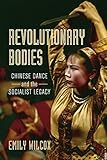
Revolutionary Bodies Chinese Dance and the Socialist Legacy / Emily Wilcox.
Material type: TextPublisher: University of California Press, Description: 1 online resource (1 p.)ISBN: 9780520971905Subject(s): History | History / Asia | HistoryGenre/Form: Electronic books.Online resources: View this content on Open Research Library. Summary: This book examines the history of concert dance in China from 1935 to 2015, with a focus on Chinese dance and its relationship to revolutionary performance culture in PRC history. The book argues that Chinese dance, not revolutionary ballet, was the primary legacy of Maoist dance research and innovation. Showing the relationship between dance and politics, it discusses dance developments during the War of Resistance Against Japan, the Chinese Civil War, the Korean War, the Great Leap Forward, the Cultural Revolution, the post-Mao era, and the period of One Belt One Road. The book emphasizes transnational exchange and highlights the contributions of immigrant and ethnic minority women, such as Chinese Trinidadian dancer Dai Ailian, Korean dancer Choe Seung-hui, Uyghur dancer Qemberxanim, Bai dancer Yang Liping, and Uyghur dancer Gulmira Mamat. It discusses the history of dance schools and companies such as the Beijing Dance Academy, the China National Opera and Dance Drama Theater, the Central Nationalities Song and Dance Ensemble, and the Xinjiang Arts Institute. Dance film is an important subject of analysis. Aesthetic experimentation is another key theme. Dance styles examined include Chinese classical dance, Chinese national folk dance (including ethnic minority dance and Han folk dance), Chinese military dance, New Dance, New Yangge, national dance drama, Dunhuang dance, peacock dance, and ballet. The book argues that kinesthetic nationalism, ethnic and spatial inclusivity, and dynamic inheritance are lasting features of Chinese dance.
| Item type | Current library | Call number | URL | Status | Date due | Barcode | Item holds |
|---|---|---|---|---|---|---|---|
 eBook
eBook
|
Digital Library
Resources in this library are accessible in digital format e.g. eBooks or eJournals accessible online. |
Link to resource | Available | ||||
|
eBook
|
Digital Library
Resources in this library are accessible in digital format e.g. eBooks or eJournals accessible online. |
Link to resource | Available |
Access copy available to the general public. Unrestricted star
This book examines the history of concert dance in China from 1935 to 2015, with a focus on Chinese dance and its relationship to revolutionary performance culture in PRC history. The book argues that Chinese dance, not revolutionary ballet, was the primary legacy of Maoist dance research and innovation. Showing the relationship between dance and politics, it discusses dance developments during the War of Resistance Against Japan, the Chinese Civil War, the Korean War, the Great Leap Forward, the Cultural Revolution, the post-Mao era, and the period of One Belt One Road. The book emphasizes transnational exchange and highlights the contributions of immigrant and ethnic minority women, such as Chinese Trinidadian dancer Dai Ailian, Korean dancer Choe Seung-hui, Uyghur dancer Qemberxanim, Bai dancer Yang Liping, and Uyghur dancer Gulmira Mamat. It discusses the history of dance schools and companies such as the Beijing Dance Academy, the China National Opera and Dance Drama Theater, the Central Nationalities Song and Dance Ensemble, and the Xinjiang Arts Institute. Dance film is an important subject of analysis. Aesthetic experimentation is another key theme. Dance styles examined include Chinese classical dance, Chinese national folk dance (including ethnic minority dance and Han folk dance), Chinese military dance, New Dance, New Yangge, national dance drama, Dunhuang dance, peacock dance, and ballet. The book argues that kinesthetic nationalism, ethnic and spatial inclusivity, and dynamic inheritance are lasting features of Chinese dance.
Description based on print version record.
Luminos
There are no comments on this title.