
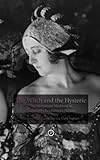
The Witch and the Hysteric: The Monstrous Medieval in Benjamin Christensen's Häxan Alexander Doty and Patricia Claire Ingham.
Material type: TextPublisher: Project Muse, Manufacturer: Project MUSE, Description: 1 online resource (68 pages)ISBN: 9780692230152Subject(s): Christensen, Benjamin, 1879-1959 -- Criticism and interpretation | Häxan (Motion picture) | Civilization, Medieval -- Psychological aspects | Hysteria in motion pictures | Motion pictures -- Denmark | Witchcraft -- Europe -- History | Witches in motion picturesGenre/Form: Electronic books. | Electronic books. Additional physical formats: Print version:: No titleDDC classification: 133.43094 LOC classification: PN1997.H39 | D68 2014Online resources: Full text available:
 | Item type | Current library | Call number | URL | Status | Date due | Barcode | Item holds |
|---|---|---|---|---|---|---|---|
 eBook
eBook
|
Digital Library
Resources in this library are accessible in digital format e.g. eBooks or eJournals accessible online. |
PN1997.H39 D68 2014 (Browse shelf(Opens below)) | Link to resource | Available |
Browsing Digital Library shelves, Shelving location: Online Access Close shelf browser (Hides shelf browser)

|

|

|

|

|

|

|
||
| PN1995.9.W6 G39 2015 Gaze Regimes | PN1995.9.W6 T375 2011 Soldiers' Stories | PN1996.9.P7 R45 2017eb Exploring movie construction and production : | PN1997.H39 D68 2014 The Witch and the Hysteric: The Monstrous Medieval in Benjamin Christensen's Häxan | PN1997.O68 H35 2018 Screening Auschwitz | PN1997.85 .B58 2016 Border Crossing | PN1997.85 .C65 2012 When Stories Travel |
Issued as part of book collections on Project MUSE.
Includes bibliographical references (pages 63-68).
Seasons of the witch -- Maleficia and belief -- Testimony troubles -- Witch, past and future : the politics of retroactive diagnosis -- Documenting the fantastic -- Conclusion : medieval monsters don't let go.
Open Access Unrestricted online access star
Benjamin Christensen's 1922 Swedish/Danish film Häxan (known under its English title as Witchcraft Through the Ages) has entranced, entertained, shocked, and puzzled audiences for nearly a century. The film mixes documentary with fantasy, history with theatrics, religion and science, the medieval past and modern culture. This uncanny content is compounded by the film's formal strangeness, a mixture of quasi-documentary with fictional episodes, illustrated lectures alongside docudrama recreations and dreamscapes. Is this a documentary, a horror flick, or both? In this chapbook, authors Doty and Ingham argue that the puzzle of Christensen's Häxan might be unraveled by attending to the film's provocative and paradoxical medievalism, its fantasmatic rendering of the witch as a medieval monster. Such monstrous medievalism, moreover, sheds considerable light on the politics of gender and culture once the witch is rendered a female figure in a time-out-of-joint.
Description based on print version record.
There are no comments on this title.