
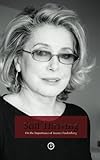
Still Thriving: On the Importance of Aranye Fradenburg edited by Eileen A. Joy.
Material type: TextPublisher: Project Muse, Manufacturer: Project MUSE, Description: 1 online resource (xx, 49 pages) : illustrationsISBN: 9780988234031Subject(s): Fradenburg, L. O. Aranye, 1953- | Psychoanalysis and literature | Humanities -- Study and teaching | Women scholars -- United States -- BiographyGenre/Form: Electronic books. | Electronic books. Additional physical formats: Print version:: No titleLOC classification: CT275.F733 | S758 2013Online resources: Full text available:
 | Item type | Current library | Call number | URL | Status | Date due | Barcode | Item holds |
|---|---|---|---|---|---|---|---|
 eBook
eBook
|
Digital Library
Resources in this library are accessible in digital format e.g. eBooks or eJournals accessible online. |
CT275.F733 S758 2013 (Browse shelf(Opens below)) | Link to resource | Available |
Issued as part of book collections on Project MUSE.
Includes bibliographical references.
Preface : like a radio left on/on the outskirts of identical cities : living (with) Fradenburg / Eileen A. Joy -- More blue doors / Patricia Clare Ingham -- Come flourish with me : critically mixing pleasure and politics / Randy P. Schiff -- Provision and provisionality / Julie Orlemanski -- Critical thriving : Chaucer, the Nun's priest tale, and the MLA / Kathy Lavezzo -- Sacrificial enjoyment / Paul Megna -- Living/riddle / Daniel C. Remein.
Open Access Unrestricted online access star
The work of L.O. Aranye Fradenburg, especially her psychoanalytic criticism of Chaucer, and her formulations of discontinuist historical approaches to the Middle Ages, has been extremely influential within medieval studies for the past 20 or so years. More recently she has been focusing on more broad defenses of the humanities, especially with regard to the valuable role of literary studies relative to the arts of everyday living, eudaimonia [flourishing], ethical community, and well-being, and also on psychoanalysis itself as a "liberal art." Relationality, intersubjectivity, aliveness, resilience, care of the self and also of others, adaptive flexibility, playfulness, shared attention, companionship, healing, and thriving seem, increasingly, to be the key watchwords and concerns of Fradenburg's work, and at the same time, the so-called "literary" mode is still central to these concerns, such that, as Fradenburg has written, "Interpretation and relationality depend on one another because all relationships are unending processes of interpretation and expression, listening and signifying. In turn, sentience assists relationality: we can't thrive and probably can't survive without minds open to possibility, capable of sensing and interpreting the tiniest shifts in, e.g., pitch and tone." This small volume features short essays and personal reflections on the importance of Fradenburg's career, as teacher and scholar, and also on the valuable role(s) that her work, and medieval studies more generally, has played in the defense of the humanities as essential to living and thriving.
Description based on print version record.
There are no comments on this title.