
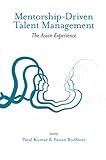
Mentorship-driven talent management : the Asian experience / edited by Payal Kumar (BML Munjal University, India), and Pawan Budhwar (Aston University, UK).
Material type: TextPublisher: Emerald Publishing Limited, Description: 1 online resource (xviii, 233 pages) ; cmISBN: 9781789736939Subject(s): Mentoring in business -- Asia | Personnel management -- Asia | Asians -- Career in business | Business & Economics, Mentoring & Coaching | Personnel & human resources managementAdditional physical formats: No titleDDC classification: 658.3124 LOC classification: HF5385 | .M46 2020Online resources: Click here to access online Summary: Evidence suggests that research on mentorship has been dominated by the West, and little is known about the cultural variations of the mentoring phenomenon. While some research has begun in emerging economies such as China and India, there is obviously a need for more research in different country contexts on the practice of mentoring, as well as its antecedents, intervening variables and expected outcomes in order to move the field forward. There is a need to identify the core theories and methodologies of mentorship which can be utilized to examine the Asian cultural context and the nuances of its management practices. This book aims to provide a deeper understanding of the contextual interpretation of mentoring by focusing on the Asian experience in countries such as China, India, Korea, Taiwan, Japan and Bangladesh. Shining a light on the importance of cross-cultural awareness and demographic dynamics when applied to talent management, it questions the positivist trend of decontextualizing HRM from the social-historical context of the workplace. It will provide business leaders and scholars with a critical understanding of what makes development, training and competency initiatives thrive in particular cultural contexts under the influence of larger historical and social structures. Heeding the call for mentoring relationships to be studied across cultures, this book on mentoring experiences in Asia is the need of the hour.
| Item type | Current library | Call number | URL | Status | Date due | Barcode | Item holds |
|---|---|---|---|---|---|---|---|
 eBook
eBook
|
Digital Library
Resources in this library are accessible in digital format e.g. eBooks or eJournals accessible online. |
HF5385 .M46 2020 (Browse shelf(Opens below)) | Link to resource | Available |
Browsing Digital Library shelves, Shelving location: Online Access Close shelf browser (Hides shelf browser)
| No cover image available |

|

|

|

|

|

|
||
| HF5382.5 .D55 2018eb Blueprint for success in college : | HF5382.7 .C73 2019 Crafting your edge for today's job market : | HF5385 .L56 2020 Mentoring millennials in an Asian context : | HF5385 .M46 2020 Mentorship-driven talent management : | HF5386 .B47 2017 Riding the innovation wave : | HF5386 .J67 2017 You're hired! : | HF5386 .N49 2018 Harnessing the power of failure : |
Includes index.
Evidence suggests that research on mentorship has been dominated by the West, and little is known about the cultural variations of the mentoring phenomenon. While some research has begun in emerging economies such as China and India, there is obviously a need for more research in different country contexts on the practice of mentoring, as well as its antecedents, intervening variables and expected outcomes in order to move the field forward. There is a need to identify the core theories and methodologies of mentorship which can be utilized to examine the Asian cultural context and the nuances of its management practices. This book aims to provide a deeper understanding of the contextual interpretation of mentoring by focusing on the Asian experience in countries such as China, India, Korea, Taiwan, Japan and Bangladesh. Shining a light on the importance of cross-cultural awareness and demographic dynamics when applied to talent management, it questions the positivist trend of decontextualizing HRM from the social-historical context of the workplace. It will provide business leaders and scholars with a critical understanding of what makes development, training and competency initiatives thrive in particular cultural contexts under the influence of larger historical and social structures. Heeding the call for mentoring relationships to be studied across cultures, this book on mentoring experiences in Asia is the need of the hour.
Print version record.
There are no comments on this title.