
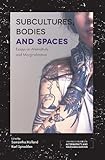
Subcultures, bodies and spaces : essays on alternativity and marginalization / edited by Samantha Holland and Karl Spracklen.
Material type: TextSeries: Emerald studies in alternativity and marginalizationPublisher: Emerald Publishing Limited, Description: 1 online resource (x, 262 pages) ; cmISBN: 9781787565111 (e-book)Subject(s): Subculture | Marginality, Social | Alternative lifestyles | Body image -- Social aspects | Social Science -- Popular Culture | Society & culture: generalAdditional physical formats: No titleDDC classification: 306.1 LOC classification: HM646 | .S83 2018Online resources: Click here to access online Summary: Alternativity delineates those spaces, scenes, club-cultures, objects and practices in modern society that are considered to be actively designed to be counter or resistive to mainstream popular culture. The idea of the alternative in popular culture became mainstream with the rise of the counter culture in 1960s America (though there were earlier forms of alternative cultures in America and other Western countries). Alternativity is associated with marginalization, both actively pursued by individuals, and imposed on individuals and sub-cultures, and was originally represented and constructed through acts of transgression, and through shared sub-cultural capital. This edited collection maps the landscape of alternativity and marginalization, providing new theory and methods in a currently under-theorized area, setting out the issues, questions, concerns and directions of this area of study. It demonstrates the theoretical richness and empirical diversity of the interdisciplinary field it encompasses, and is deliberately feminist in its approach and its composition, with a majority of the contributors being women. Divided into three sub-sections, focused on sub-cultures, bodies and spaces, contributors explore this exciting new terrain, both through critiques of theory and new theoretical developments, and case studies of alternativity and marginalization in practice and in performance, expanding our understanding of the alternative, the liminal and the transgressive.
| Item type | Current library | Call number | URL | Status | Date due | Barcode | Item holds |
|---|---|---|---|---|---|---|---|
 eBook
eBook
|
Digital Library
Resources in this library are accessible in digital format e.g. eBooks or eJournals accessible online. |
HM646 .S83 2018 (Browse shelf(Opens below)) | Link to resource | Available |
Includes index.
Alternativity delineates those spaces, scenes, club-cultures, objects and practices in modern society that are considered to be actively designed to be counter or resistive to mainstream popular culture. The idea of the alternative in popular culture became mainstream with the rise of the counter culture in 1960s America (though there were earlier forms of alternative cultures in America and other Western countries). Alternativity is associated with marginalization, both actively pursued by individuals, and imposed on individuals and sub-cultures, and was originally represented and constructed through acts of transgression, and through shared sub-cultural capital. This edited collection maps the landscape of alternativity and marginalization, providing new theory and methods in a currently under-theorized area, setting out the issues, questions, concerns and directions of this area of study. It demonstrates the theoretical richness and empirical diversity of the interdisciplinary field it encompasses, and is deliberately feminist in its approach and its composition, with a majority of the contributors being women. Divided into three sub-sections, focused on sub-cultures, bodies and spaces, contributors explore this exciting new terrain, both through critiques of theory and new theoretical developments, and case studies of alternativity and marginalization in practice and in performance, expanding our understanding of the alternative, the liminal and the transgressive.
Print version record
There are no comments on this title.