
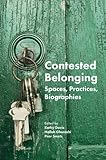
Contested belonging : spaces, practices, biographies / edited by Kathy Davis, Halleh Ghorashi, Peer Smets.
Material type: TextPublisher: Emerald Publishing Limited, Description: 1 online resource (xvi, 404 pages)ISBN: 9781787432062 (e-book)Subject(s): Belonging (Social psychology) | Social Science, Emigration & Immigration | "Migration, immigration & emigration"Additional physical formats: No titleDDC classification: 302 LOC classification: HM1033 | .C66 2018Online resources: Click here to access online Summary: In 'Contested Belonging: Spaces, Practices, Biographies' contributions by well-known international scholars from different disciplines address the sites, practices, and narratives in which belonging is imagined, enacted and constrained, negotiated and contested. Belonging is viewed from the perspectives of both migrants and refugees in their host countries as well as from people who are ostensibly at home and yet may experience various degrees of alienation in their countries of origin. The book focuses on three particular dimensions of belonging: belonging as space (neighbourhood, workplace, home), as practice (virtual, physical, cultural), and as biography (life stories, group narratives). What role do physical, digital, transnational and in-between spaces play and how are they used in order to create/contest belonging? Which practices do people engage in in order to gain/foster/invent a certain/new sense of belonging? What can the biographies and narratives of people reveal about their complicated and contested experiences of belonging? Contested Belonging: Spaces, Practices, Biographies convincingly shows how individual and collective struggles for belonging are not only associated with exclusion and othering, but also lead to surprising and inspiring forms of social action and transformation, suggesting that there may be more reason for hope than for despair.
| Item type | Current library | Call number | URL | Status | Date due | Barcode | Item holds |
|---|---|---|---|---|---|---|---|
 eBook
eBook
|
Digital Library
Resources in this library are accessible in digital format e.g. eBooks or eJournals accessible online. |
HM1033 .C66 2018 (Browse shelf(Opens below)) | Link to resource | Available |
Browsing Digital Library shelves, Shelving location: Online Access Close shelf browser (Hides shelf browser)
| No cover image available |

|

|

|

|

|

|
||
| HM1013 S83 2013 Principles of social psychology / | HM1019 .S74 2017 From humility to hubris among scholars and politicians : | HM1033 .C47 2018 Revolutionary nostalgia : | HM1033 .C66 2018 Contested belonging : | HM1033 .M4553 2017 Memory in Motion | HM1033 .S63 2006 Social psychology of the workplace | HM1033 .S63 2007 Social psychology of gender |
Includes index.
Includes bibliographical references.
In 'Contested Belonging: Spaces, Practices, Biographies' contributions by well-known international scholars from different disciplines address the sites, practices, and narratives in which belonging is imagined, enacted and constrained, negotiated and contested. Belonging is viewed from the perspectives of both migrants and refugees in their host countries as well as from people who are ostensibly at home and yet may experience various degrees of alienation in their countries of origin. The book focuses on three particular dimensions of belonging: belonging as space (neighbourhood, workplace, home), as practice (virtual, physical, cultural), and as biography (life stories, group narratives). What role do physical, digital, transnational and in-between spaces play and how are they used in order to create/contest belonging? Which practices do people engage in in order to gain/foster/invent a certain/new sense of belonging? What can the biographies and narratives of people reveal about their complicated and contested experiences of belonging? Contested Belonging: Spaces, Practices, Biographies convincingly shows how individual and collective struggles for belonging are not only associated with exclusion and othering, but also lead to surprising and inspiring forms of social action and transformation, suggesting that there may be more reason for hope than for despair.
Print version record
There are no comments on this title.