
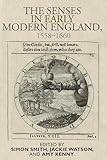
The senses in early modern England, 1558-1660 Jackie Watson, Simon Smith.
Material type: TextPublisher: Manchester University Press, Description: 1 online resource (1 p.)ISBN: 9781526146465Subject(s): Technology & Engineering / Agriculture | TechnologyGenre/Form: Electronic books.Online resources: View this content on Open Research Library. Summary: This book attempts to interrogate the literary, artistic and cultural output of early modern England. Following Constance Classen's view that understandings of the senses, and sensory experience itself, are culturally and historically contingent; it explores the culturally specific role of the senses in textual and aesthetic encounters in England. The book follows Joachim-Ernst Berendt's call for 'a democracy of the senses' in preference to the various sensory hierarchies that have often shaped theory and criticism. It argues that the playhouse itself challenged its audiences' reliance on the evidence of their own eyes, teaching early modern playgoers how to see and how to interpret the validity of the visual. The book offers an essay on each of the five senses, beginning and ending with two senses, taste and smell, that are often overlooked in studies of early modern culture. It investigates Robert Herrick's accounts in "Hesperides" of how the senses function during sexual pleasure and contact. The book also explores sensory experiences, interrogating textual accounts of the senses at night in writings from the English Renaissance. It offers a picture of early modern thought in which sensory encounters are unstable, suggesting ways in which the senses are influenced by the contexts in which they are experienced: at night, in states of sexual excitement, or even when melancholic. The book looks at the works of art themselves and considers the significance of the senses for early modern subjects attending a play, regarding a painting, and reading a printed volume.
| Item type | Current library | Call number | URL | Status | Date due | Barcode | Item holds |
|---|---|---|---|---|---|---|---|
 eBook
eBook
|
Digital Library
Resources in this library are accessible in digital format e.g. eBooks or eJournals accessible online. |
Link to resource | Available |
Access copy available to the general public. Unrestricted star
This book attempts to interrogate the literary, artistic and cultural output of early modern England. Following Constance Classen's view that understandings of the senses, and sensory experience itself, are culturally and historically contingent; it explores the culturally specific role of the senses in textual and aesthetic encounters in England. The book follows Joachim-Ernst Berendt's call for 'a democracy of the senses' in preference to the various sensory hierarchies that have often shaped theory and criticism. It argues that the playhouse itself challenged its audiences' reliance on the evidence of their own eyes, teaching early modern playgoers how to see and how to interpret the validity of the visual. The book offers an essay on each of the five senses, beginning and ending with two senses, taste and smell, that are often overlooked in studies of early modern culture. It investigates Robert Herrick's accounts in "Hesperides" of how the senses function during sexual pleasure and contact. The book also explores sensory experiences, interrogating textual accounts of the senses at night in writings from the English Renaissance. It offers a picture of early modern thought in which sensory encounters are unstable, suggesting ways in which the senses are influenced by the contexts in which they are experienced: at night, in states of sexual excitement, or even when melancholic. The book looks at the works of art themselves and considers the significance of the senses for early modern subjects attending a play, regarding a painting, and reading a printed volume.
Description based on print version record.
KU Select 2019: HSS Backlist Books
There are no comments on this title.