
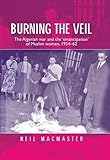
Burning the veil The Algerian war and the 'emancipation' of Muslim women, 1954-62 / Neil Macmaster.
Material type: TextPublisher: Manchester University Press, Description: 1 online resource (1 p.)ISBN: 9781526146182Subject(s): Religion / Islam | ReligionGenre/Form: Electronic books.Online resources: View this content on Open Research Library. Summary: In May 1958, and four years into the Algerian War of Independence, a revolt again appropriated the revolutionary and republican symbolism of the French Revolution by seizing power through a Committee of Public Safety. This book explores why a repressive colonial system that had for over a century maintained the material and intellectual backwardness of Algerian women now turned to an extensive programme of 'emancipation'. After a brief background sketch of the situation of Algerian women during the post-war decade, it discusses the various factors contributed to the emergence of the first significant women's organisations in the main urban centres. It was only after the outbreak of the rebellion in 1954 and the arrival of many hundreds of wives of army officers that the model of female interventionism became dramatically activated. The French military intervention in Algeria during 1954-1962 derived its force from the Orientalist current in European colonialism and also seemed to foreshadow the revival of global Islamophobia after 1979 and the eventual moves to 'liberate' Muslim societies by US-led neo-imperialism in Afghanistan and Iraq. For the women of Bordj Okhriss, as throughout Algeria, the French army represented a dangerous and powerful force associated with mass destruction, brutality and rape. The central contradiction facing the mobile socio-medical teams teams was how to gain the trust of Algerian women and to bring them social progress and emancipation when they themselves were part of an army that had destroyed their villages and driven them into refugee camps.
| Item type | Current library | Call number | URL | Status | Date due | Barcode | Item holds |
|---|---|---|---|---|---|---|---|
 eBook
eBook
|
Digital Library
Resources in this library are accessible in digital format e.g. eBooks or eJournals accessible online. |
Link to resource | Available |
Access copy available to the general public. Unrestricted star
In May 1958, and four years into the Algerian War of Independence, a revolt again appropriated the revolutionary and republican symbolism of the French Revolution by seizing power through a Committee of Public Safety. This book explores why a repressive colonial system that had for over a century maintained the material and intellectual backwardness of Algerian women now turned to an extensive programme of 'emancipation'. After a brief background sketch of the situation of Algerian women during the post-war decade, it discusses the various factors contributed to the emergence of the first significant women's organisations in the main urban centres. It was only after the outbreak of the rebellion in 1954 and the arrival of many hundreds of wives of army officers that the model of female interventionism became dramatically activated. The French military intervention in Algeria during 1954-1962 derived its force from the Orientalist current in European colonialism and also seemed to foreshadow the revival of global Islamophobia after 1979 and the eventual moves to 'liberate' Muslim societies by US-led neo-imperialism in Afghanistan and Iraq. For the women of Bordj Okhriss, as throughout Algeria, the French army represented a dangerous and powerful force associated with mass destruction, brutality and rape. The central contradiction facing the mobile socio-medical teams teams was how to gain the trust of Algerian women and to bring them social progress and emancipation when they themselves were part of an army that had destroyed their villages and driven them into refugee camps.
Description based on print version record.
KU Select 2019: HSS Backlist Books
There are no comments on this title.