
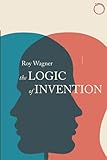
The Logic of Invention Roy Wagner.
Material type: TextPublisher: HAU Books, Description: 1 online resource (147 p.)ISBN: 9780999157053Subject(s): Social Science / Anthropology / Cultural & Social | Social sciencesGenre/Form: Electronic books.Online resources: View this content on Open Research Library. Summary: In this long-awaited sequel to The Invention of Culture, Roy Wagner tackles the logic and motives that underlie cultural invention. Could there be a single, logical factor that makes the invention of the distinction between self and other possible, much as specific human genes allow for language? Wagner explores what he calls “the reciprocity of perspectivesâ€_x009d_ through a journey between Euro-American bodies of knowledge and his in-depth knowledge of Melanesian modes of thought. This logic grounds variants of the subject/object transformation, as Wagner works through examples such as the figure-ground reversal in Gestalt psychology, Lacan's theory of the mirror-stage formation of the Ego, and even the self-recursive structure of the aphorism and the joke. Juxtaposing Wittgenstein's and Leibniz's philosophy with Melanesian social logic, Wagner explores the cosmological dimensions of the ways in which different societies develop models of self and the subject/object distinction.
| Item type | Current library | Call number | URL | Status | Date due | Barcode | Item holds |
|---|---|---|---|---|---|---|---|
 eBook
eBook
|
Digital Library
Resources in this library are accessible in digital format e.g. eBooks or eJournals accessible online. |
Link to resource | Available |
Access copy available to the general public. Unrestricted star
In this long-awaited sequel to The Invention of Culture, Roy Wagner tackles the logic and motives that underlie cultural invention. Could there be a single, logical factor that makes the invention of the distinction between self and other possible, much as specific human genes allow for language? Wagner explores what he calls “the reciprocity of perspectivesâ€_x009d_ through a journey between Euro-American bodies of knowledge and his in-depth knowledge of Melanesian modes of thought. This logic grounds variants of the subject/object transformation, as Wagner works through examples such as the figure-ground reversal in Gestalt psychology, Lacan's theory of the mirror-stage formation of the Ego, and even the self-recursive structure of the aphorism and the joke. Juxtaposing Wittgenstein's and Leibniz's philosophy with Melanesian social logic, Wagner explores the cosmological dimensions of the ways in which different societies develop models of self and the subject/object distinction.
Description based on print version record.
KU Select 2017: Front list Collection
There are no comments on this title.